CALL US ANYTIME
+86-2132557631


Retailers and emerging apparel brands routinely face a familiar set of challenges when sourcing daily wear: toxic chemical residues that trigger skin allergies, synthetic fabrics with poor breathability, and manufacturing processes that contribute to significant environmental degradation. On the business side, sustainable goods are often burdened by supply chain instability and high minimum order requirements, making it difficult for smaller brands to enter the market. These are the exact pain points that shaped the strategic direction of Peony & Buyoh Co., Ltd., a specialized eco-friendly clothing enterprise focused on the development, bulk production, and sale of sustainable apparel made from organic and regenerated fibers.
Founded in 2004, Peony & Buyoh operates a Shanghai sales office alongside a Shandong factory, with business coverage spanning the European Union, North America, Australia, and South America. As a vertically integrated manufacturing and ODM/OEM service provider, the company controls the process from knitting and dyeing through to sewing, which supports rigorous quality control and reliable delivery. This structure directly addresses the industry's supply chain instability concerns, since fabric production, dyeing, and garment assembly all remain within a closed-loop ecosystem rather than being scattered across disconnected subcontractors.
The company's development history reflects a deliberate shift toward sustainability. In 2009, Peony & Buyoh invested in its own clothing factory in Shandong. By 2012, it had built a knitting workshop capable of producing single jersey, ribs, french terry, and interlock fabrics in-house. The turning point came in 2016, when the company recognized the need to make truly eco-friendly products that would not only support safe and healthy human life but also prevent contributions to air, water, and land pollution — leading to a focused shift toward organic cotton, bamboo viscose, modal, and recycled material.
In 2018, Peony & Buyoh built a solar power station on the roofs of its workshops, which now provides more than 70% of the factory's electricity for the whole year. Resilience was tested in 2021, when the company achieved 80% of the previous year's total order volume by August, demonstrating stability during global supply chain disruptions.
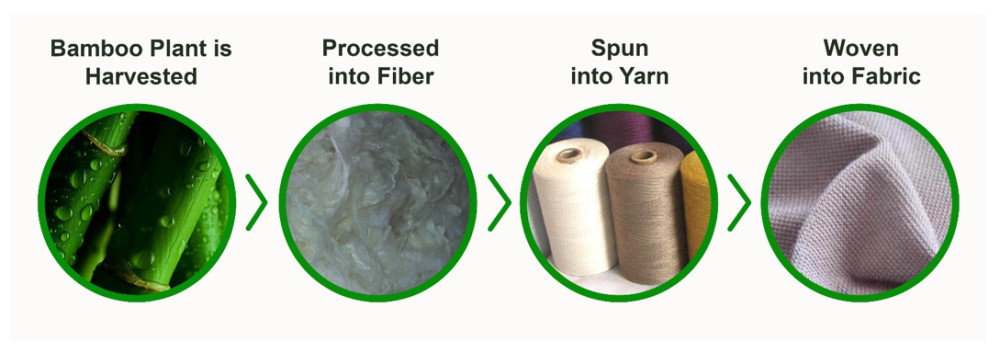
Peony & Buyoh specializes in non-GMO, chemical-free organic cotton and high-performance regenerated fibers such as Bamboo Viscose and Modal. Manufacturing precision is supported by automatic fabric spreading and multi-layer cutting machines that ensure zero-tension spreading and high-accuracy pattern execution, along with an automatic elastic band cutting and joining machine that completes cutting, splicing, multi-needle sewing (with bar-tacks if needed), and automatic feeding in a single high-speed operation.
Several technical features distinguish the company's fabric engineering:
4-needle flatlock stitching for seamless comfort against the skin.
Modal fabric with moisture-wicking micropore structures that help keep skin dry throughout the day.
Temperature-regulating fiber applications, including modal underwear and sportswear.
Natural antibacterial and odor-resistant properties derived from bamboo raw material, which effectively inhibit bacterial growth for fresh daily wear.
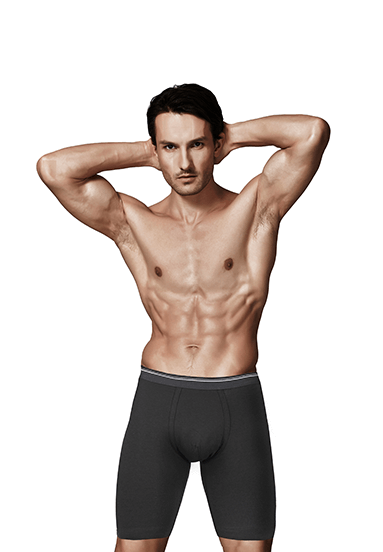
3D contoured front pouches designed for ergonomic men's wear.
Together, these features reflect the company's positioning as a China professional bamboo fiber clothing manufacturer capable of translating raw material advantages into wearable comfort.
The Eco-friendly Clothing Line is positioned as high-performance, sustainable daily wear for eco-conscious consumers and professional retailers, built around sustainable innovation, high-performance comfort, and minimalist aestheticsfor next-to-skin essentials.
Positioned as silk-soft, non-toxic intimate apparel for daily comfort, this line uses hypoallergenic materials to prevent allergies and irritation for sensitive skin, paired with moisture-wicking micropores for breathability and odor resistance. Material variety spans Organic Cotton, Bamboo Viscose, Modal, and MicroModal, with 3D contoured pouches and flatlock stitching for ergonomic design.
Designed for yoga, gym, and home relaxation, this category includes T-shirts, polo shirts, tank tops, leggings, and hoodies, built from High Wet Modulus (HWM) rayon/modal and bamboo viscose in single jersey, ribs, and french terry structures.
Through long-term collaboration with well-known accessories factories, the company supplies beanies, caps, scarves, gloves, and socks made from recycled or organic materials, including organic wool, organic cotton, bamboo viscose, merino wool, alpaca blend, lamb wool, cashmere, recycled acrylic, recycled polyester, and cotton.
Peony & Buyoh holds a set of industry certifications, including GOTS (Global Organic Textile Standard), OCS (Organic Content Standard), GRS (Global Recycled Standard), OEKO-TEX Standard 100, and BSCI (Business Social Compliance Initiative).
Three cases from the company's operations illustrate real-world performance:
Global Market Expansion Case: International retailers in the EU and North American markets required high-volume apparel meeting strict GOTS and Oeko-Tex environmental standards. The company successfully exported millions of eco-friendly garments, maintaining 100% compliance with international non-toxic certifications and enhancing customers' CSR profiles.
Supply Chain Resilience Case: During the 2021 shipping crisis, global wholesale partners needed production and delivery maintained despite COVID-19 impacts and logistics congestion. Peony & Buyoh achieved 80% of the total annual order volume by August 2021, supporting inventory stability for partners.
Custom Brand Partnership Case: High-end sustainable fashion brands requiring OEM or ODM services needed complex tech packs translated into bulk production. The company provided execution from technical analysis to final garment, supporting brand launches with low MOQs of 500–1,500 pieces and verified sustainable credentials.
Recognizing that high minimum order requirements can exclude smaller sustainable brands, Peony & Buyoh offers a flexible Minimum Order Quantity (MOQ) ranging from 500 to 1,500 pieces per style, supporting both startups and established brands. Pricing is value-based, reflecting sustainable material selection and technical complexity. Quality is maintained through a dedicated Quality Control department applying AQL 2.5 standards across pre-production, during-production, and final inspections, while global export capability includes both FCL and LCL shipping.
The company maintains a long-term partnership with Lenzing for Modal fiber sourcing since 1999, alongside ownership and investment in specialized knitting and dyeing facilities. Self-owned circular knitting looms secure full fabric control within this closed-loop production ecosystem, reducing reliance on outsourced suppliers and supporting consistent fabric quality from raw fiber to finished garment.
From its 2004 founding through its 2018 solar power investment and its documented resilience during the 2021 supply chain disruptions, Peony & Buyoh has built its identity around vertical integration, certified sustainable materials, and flexible order structures. For retailers and brand owners evaluating a China professional bamboo fiber clothing manufacturer, the combination of GOTS, OCS, GRS, OEKO-TEX, and BSCI certifications, documented case studies across global markets, and technical fabric features such as bamboo's natural antibacterial properties and modal's moisture-wicking micropores offers a data-backed picture of what the company delivers in practice.